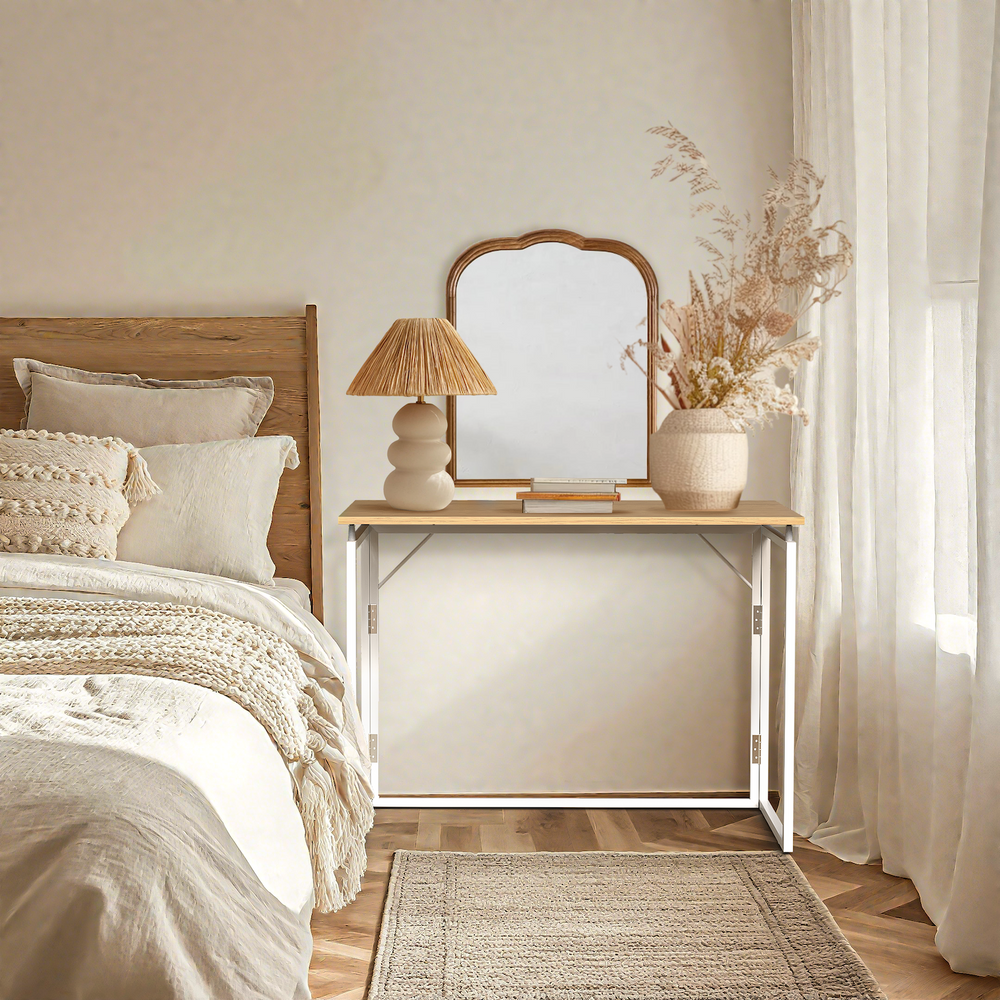
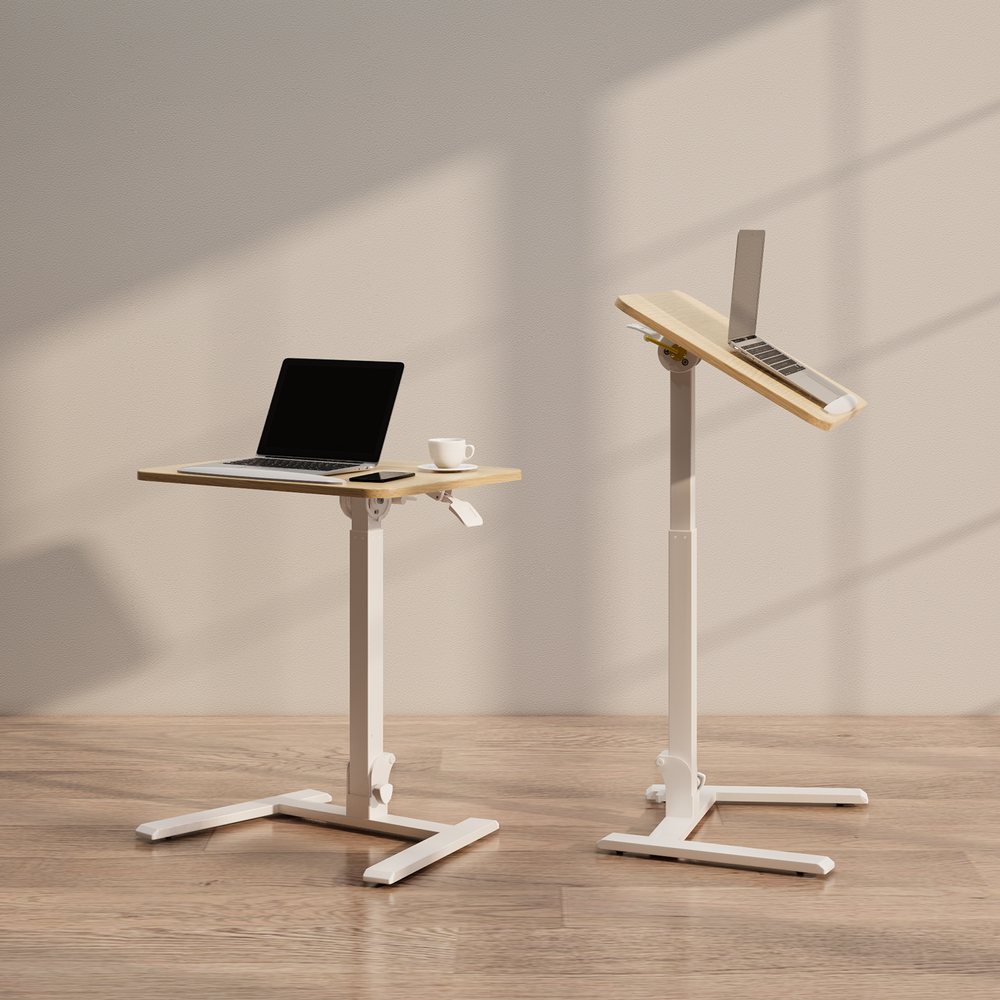
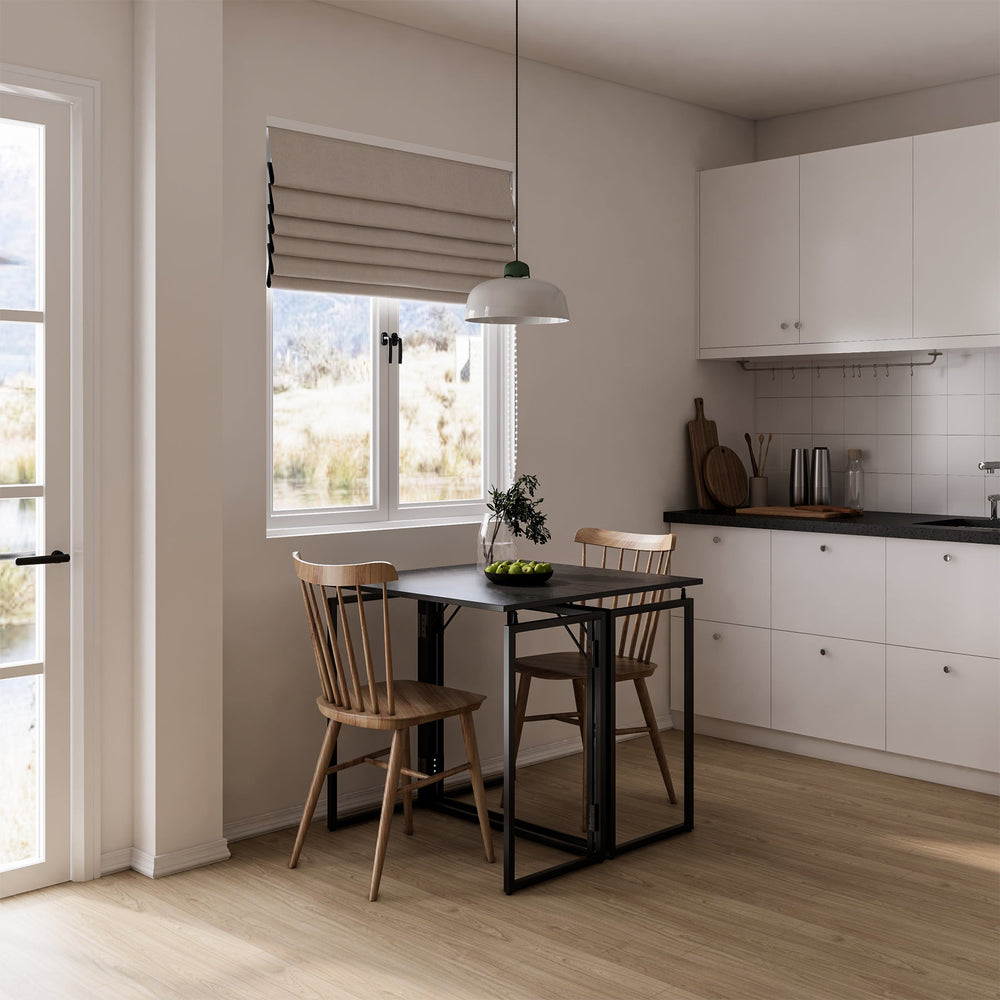
At first glance, many folding desks on the market look almost identical.
Similar shapes. Similar sizes. Similar promises.
But once you start using them — opening, closing, moving, and living with them day after day — the differences become clear very quickly.
A truly well-designed folding desk isn’t just about folding.
It’s about how it’s built, how it feels, and how it supports real life.
Here’s what actually separates a high-quality folding desk from the rest — and why those details matter more than most people realize.
1. Folding Isn’t Enough — Stability Is the Real Test
Many folding desks focus only on being lightweight and collapsible.
As a result, they often sacrifice stability.
Common issues with lower-quality folding desks include:
- wobbling during typing or writing
- uneven legs that shift on the floor
- weak joints that loosen over time
A well-crafted folding desk uses a one-piece metal frame structure that stays firm when opened and locks securely into place. When you sit down to work, study, or create, the desk should feel solid — not temporary.
At Alawooder, folding is designed as a function, not a compromise.
2. No Installation vs. “Easy Assembly” — A Big Difference
Many products claim to be “easy to assemble,” but still require:
- tools
- screws
- spare parts
- time and patience
A true no-installation folding desk works straight out of the box.
No manuals.
No missing hardware.
No frustration.
The desk opens, locks, and is ready to use in seconds — making it ideal for:
- renters
- students
- frequent movers
- minimalists who value simplicity
This difference alone often determines whether a desk becomes a daily favorite or an occasional burden.

3. The Way the Desktop Is Fixed Matters More Than You Think
In many folding desks, the tabletop is attached with basic screws or weak hinges. Over time, this can lead to:
- loosening panels
- creaking sounds
- reduced load capacity
A better approach is an integrated snap-lock or clip-in system that firmly connects the desktop to the metal frame. This design:
- improves overall strength
- reduces wear and tear
- keeps the surface stable even after repeated folding
It’s a small structural detail — but one that dramatically affects long-term durability.
4. Designed for Repeated Use, Not Occasional Use
Some folding desks are clearly designed to be used “once in a while.”
A truly good folding desk is designed to be:
- opened daily
- folded frequently
- moved between rooms
- relied on for real tasks
This means smooth joints, durable materials, and a frame that doesn’t weaken with time. It also means the desk looks good enough to stay visible — not something you feel the need to hide away.
5. Clean Design That Fits Modern Living
Modern homes value space, calm, and visual balance.
A quality folding desk should support that — not fight it.
Key design differences include:
- clean lines instead of bulky shapes
- neutral finishes that blend into interiors
- slim profiles that don’t dominate a room
Rather than feeling like “temporary furniture,” a well-designed folding desk becomes a natural part of your home.
Conclusion: The Difference Is in the Details
All folding desks may fold — but not all folding desks are built the same.
What truly sets a high-quality folding desk apart is:
- structural stability
- genuine no-installation design
- integrated frame and tabletop construction
- durability for daily life
- thoughtful, modern aesthetics
At alawooder.com, folding desks are designed not just to save space, but to respect how people actually live — changing rooms, changing routines, and changing needs.
Because when furniture fits your life effortlessly, you stop thinking about it — and start focusing on what really matters.