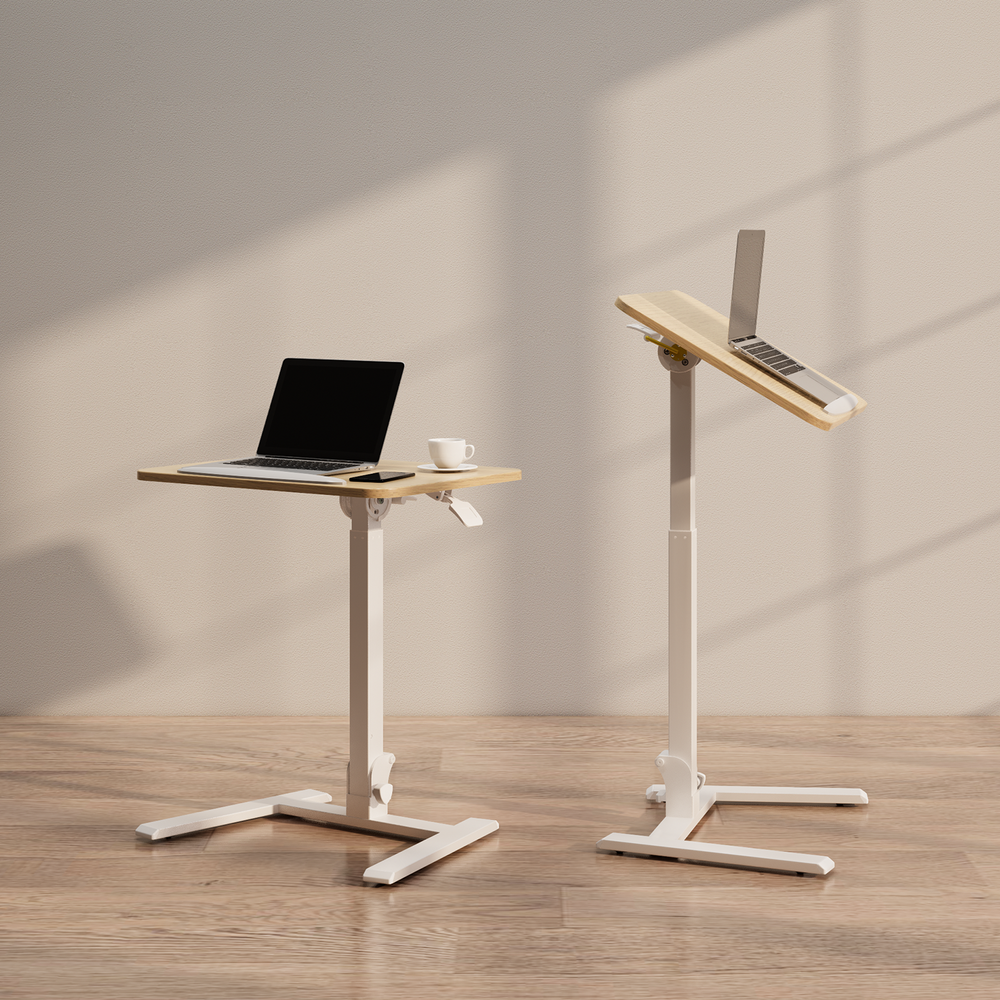
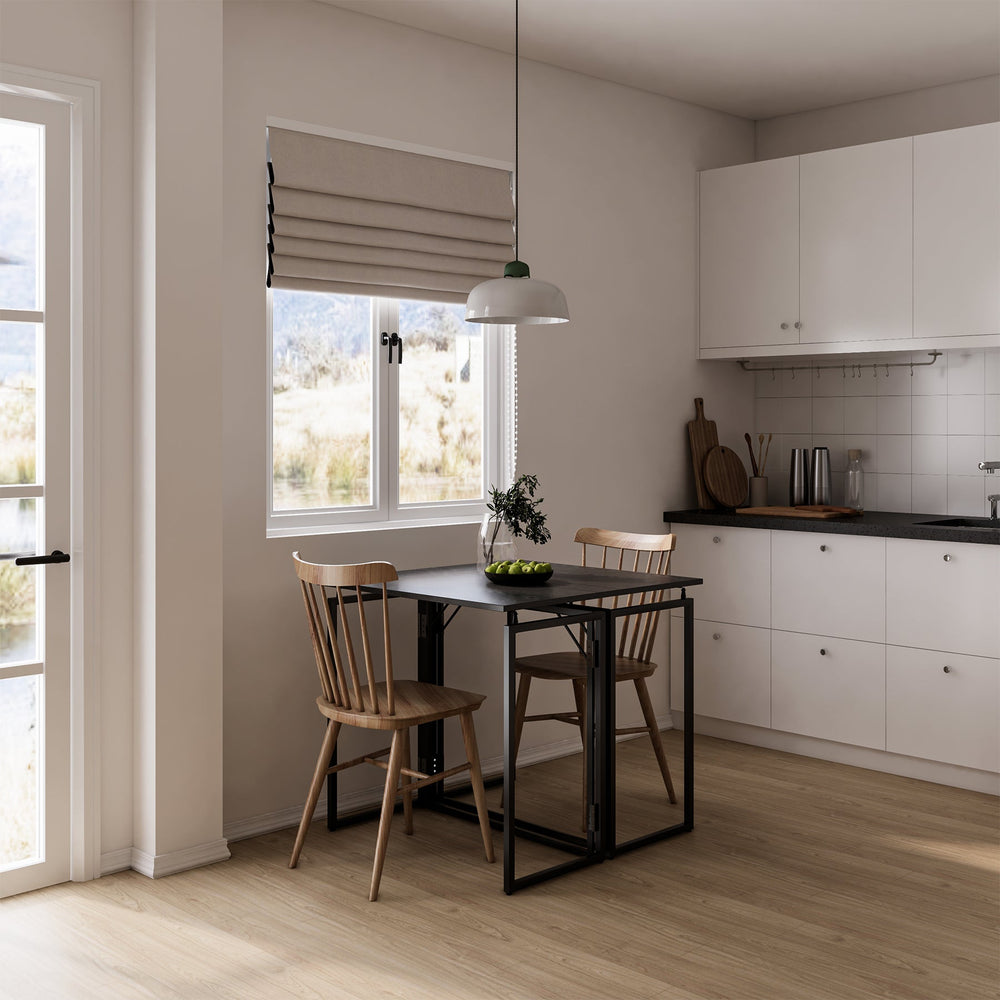
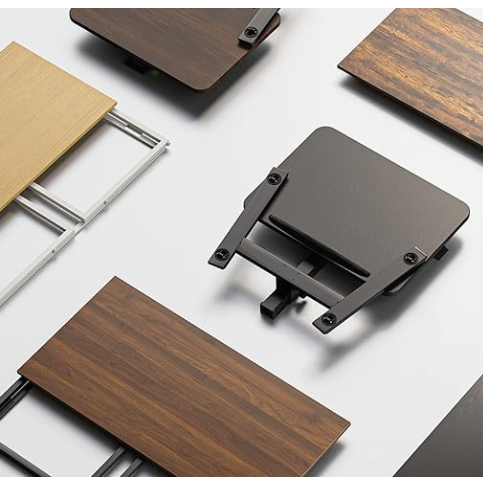
The Alawooder Folding Desk 30 Inch has a 31.5-inch-wide tabletop. The Folding Desk 40 Inch measures 39.4 inches across. The Mobile Folding Desk has a narrower 25.6-inch top, with a different depth and adjustable working height. Use these published measurements to compare the models; the size names alone are insufficient.
The decision is about the equipment you use together, the space available while seated and whether the desk will move or fold between sessions. This guide compares all three models and shows how to test a tabletop layout before ordering.
Compare the actual dimensions
All measurements below are in inches. Width runs across the front of the top; depth runs from front to back. Folded entries use width × depth × height. These are published product dimensions, not measurements from an independent hands-on test.
| Specification | Folding Desk 30 Inch | Folding Desk 40 Inch | Mobile Folding Desk |
|---|---|---|---|
| Tabletop width | 31.5 | 39.4 | 25.6 |
| Tabletop depth | 15.7 | 19.7 | 18.9 |
| Working height | 29.1, fixed | 29.1, fixed | 29–42, adjustable published range |
| Folded dimensions | 31.5 × 2.3 × 30.3 | 39.4 × 2.3 × 30.3 | 25.6 × 6.3 × 32.2 |
| Wheels | No rolling feature listed | No rolling feature listed | Hidden wheels |
| Assembly listing | Preassembled | Preassembled | Preassembled |
| Height adjustment | None | None | Manual pneumatic adjustment |
| Product page | 30 Inch model | 40 Inch model | Mobile model |
Setup and folding still require the model's instructions even when no furniture assembly is required. The Mobile's product information also lists a tilting top; angle adjustment is separate from changing the height. Check the current variant's specification before purchasing.
What changes between the 30 Inch and 40 Inch models?
The 40 Inch model adds 7.9 inches of width and 4 inches of depth over the 30 Inch model. Both have a listed fixed working height of 29.1 inches and a 2.3-inch folded depth. The extra width remains present when the larger desk is folded, so a narrow storage opening can still rule it out.
The smaller desk is a candidate when the working spread is limited and the wall position is tight. The larger desk is a candidate when two tasks need space side by side, such as typing and handwritten notes. Neither description proves that a particular monitor, printer or craft machine is suitable. Check the equipment footprint, its placement and the model-specific permitted load.
Depth is easy to overlook. A deeper surface may leave more room for a keyboard in front of a screen, but the actual stand and cable arrangement determine the fit. A monitor's advertised screen diagonal does not tell you how deep its base is or what room the keyboard needs.
The Mobile is narrower, but deeper than the 30 Inch model
The Mobile top is 5.9 inches narrower than the 30 Inch desk, while adding 3.2 inches of depth. It is therefore not simply a smaller version in every direction. A room with a tight front-to-back limit could accommodate the fixed model differently from the Mobile, even though the Mobile is narrower.
Compared with the 40 Inch desk, the Mobile gives up 13.8 inches of width and 0.8 inches of depth. Its adjustable height and wheels address different needs from a wider work surface. If you seldom change location or working height, compare how much value those features add to your own routine.
A tabletop calculation you can repeat
Consider a hypothetical side-by-side arrangement: a laptop occupying 14 inches of width, an open notebook occupying 8, a mouse area occupying 7, and 2 inches of combined gaps between the items. That arrangement totals 31 inches across. Its largest item depth is 11 inches before adding any front-edge or cable space.
| Candidate top | Calculation | What to test next |
|---|---|---|
| 30 Inch model | 31.5 − 31 = 0.5 inches remaining | Whether the very small spare width works for hand movement and repositioning |
| 40 Inch model | 39.4 − 31 = 8.4 inches remaining | Where the extra width belongs and whether the room has the space |
| Mobile model | 25.6 − 31 = a 5.4-inch shortfall | Whether a different arrangement works without removing items needed together |
This example is a planning exercise, not a fit guarantee. It uses invented equipment dimensions to show the method. Place your own tools inside a paper outline of the candidate top. Rotate or reposition items only if that arrangement suits how you actually work. A calculation can reject an impossible spread, but it cannot tell you whether the remaining space feels usable.
Include the chair and room access
Measure the complete working position with your chair occupied, pulled out and returned to the desk. The top's dimensions are only part of that position. Check knee clearance, chair arms, nearby drawers and the usual walking route.
A fixed corner can keep the chair, lighting and power in one repeatable arrangement. That can be useful for a consistent call background or equipment connected to several devices. A mobile setup needs these checks in each location where you expect to work. Use the small home office planning guide to build the room layout around the desk.
Choose height independently of tabletop size
The two fixed-height desks share the same published 29.1-inch height. Choosing the wider one does not lower or raise the work surface. Test that height against the chair, keyboard or other input device you plan to use.
The Mobile has a published 29–42-inch adjustment range. That range is not a guarantee of seated or standing suitability for every person. The keyboard's thickness and any tabletop accessory change the height where your hands work. Check both intended positions with your actual equipment; the desk height-fit guide explains the process.
Compare storage using all three folded measurements
The two fixed models share a thin folded depth, but their folded widths differ. The Mobile's folded profile is 6.3 inches deep, and its complete folded size is 25.6 × 6.3 × 32.2 inches. A narrow model can therefore require a deeper storage opening.
Measure the opening, internal space and route to the storage position. Include door movement, baseboards and handles. Do not assume that the desk can safely stand unsupported, lean against a wall or slide beneath a bed solely because its dimensions appear to fit. Follow its storage instructions. For a step-by-step fit check, see the folded desk measurement guide.
When mobility is useful—and what it does not establish
Wheels are relevant when the desk needs to move between practical working and parking locations on the same floor. Check the floor surface, rugs, thresholds, turns and cables along that route. A rolling feature does not establish effortless travel over carpet or make carrying the desk upstairs a rolling task.
Also separate mobility from transporting equipment on the top. A published static load condition does not establish a safe moving load. Remove loose items and follow the model's instructions before movement or adjustment. The mobile route guide covers those decisions without assuming wheel brakes or floor compatibility.
Specifications to confirm for accessories and heavier equipment
For a monitor arm, get the approved attachment method, top thickness, edge shape, under-top clearance and permitted loads for the exact model. The combined equipment weight and the concentrated force at a clamp are different questions. A larger tabletop or a metal frame does not confirm compatibility.
For any heavier device, ask for the applicable load rating and conditions if these are unclear or conflicting. For adjustable equipment, distinguish a permitted adjustment load from a set-and-locked static condition. This comparison does not assign a numeric load to the fixed desks or treat one number as valid for every activity.
Make the final comparison around a daily routine
- One fixed laptop corner: start by testing the 30 Inch desk's actual top dimensions and 29.1-inch height.
- A wider spread that stays in one location: test the 40 Inch desk against both equipment and occupied-chair space.
- Several work locations or a need for height adjustment: test the Mobile's smaller width, published height range and complete travel route.
- A desk stored after each session: compare the full folded envelopes and rehearse removing your accessories.
Check current color, availability and ordering terms on the relevant product page after choosing the format. If a measurement or equipment requirement remains unanswered, use Alawooder contact with the exact model and the dimensions you need confirmed. You can review the three options together on the desk comparison page.
References: 31.5-inch fixed desk, 39.4-inch fixed desk, Mobile Folding Desk. Product specifications reviewed October 15, 2026. Published dimensions are seller-provided information; the measurement examples in this guide are illustrative.